
"coffee exporting nations"
4000 article(s) found

Introduction of Santa Cruz Manor Coffee flavor varieties with unique ecological environment
The national emblem of Ecuador was launched in 1900, which is similar to the national emblem of Colombia. A ferocious American condor vulture spreads its wings above the national emblem. It is the national bird of Ecuador, symbolizing sovereignty and independence. The design of Ecuador's national emblem is unique, which fully shows the amorous feelings of the country: Mount Chimborazo, Ecuador's highest peak, is covered with snow and stands towering against the blue sky.

Ethiopian Coffee Manor Flavor description Price planting Environment Brand taste introduction
In December 1994, the Constitution of the Federal Democratic Republic of Ethiopia was formulated. According to the Constitution, Ethiopia will implement a federal system and a parliamentary cabinet system after the general election for a term of five years. After the national election in May 1995, the Federal Democratic Republic of Ethiopia was established on August 22, and Meles became prime minister in her capacity as chairman of the majority party of the people's House of Representatives. On May 14, 2000, Ethiopia held a national meeting

Colombia's coffee exports will be affected by the epidemic in 2020! Colombia is optimistic about the domestic coffee market
Because of the impact of the epidemic, the travel of people all over the world has been restricted, and countries have implemented traffic control regulations one after another, which has affected the exports of many coffee-producing countries to varying degrees, and disrupted many coffee supply chains around the world. the production, transportation and retail of coffee are greatly affected. Colombia, the fourth largest economy in Latin America, has at least 540000 countries.

History and culture of Colombian coffee the development of Colombian coffee
In the early 1960s, coffee production was about 600kg per hectare. Now it has risen to about 900kg, and some farms can reach 2500 kg. However, quality assurance is a top priority for the coffee industry. Colombia established the National Coffee Management Association (Federacion Nacional de Cafeteros, or FNC) in 1927, which is responsible for quality supervision. Although the association is a private company

Introduction to the grading of Ethiopian Coffee
Sun-cured coffee accounts for 65% of exports. Mainly picked by families, red coffee beans are placed on cement floors or on high tables to dry to about 11.5% humidity, then peeled and cleaned. Coffee grading and quality control system in Ethiopia, coffee grading and quality control system is divided into three levels: producer, regional and national. All coffee is required before leaving the country of origin.

Description of taste and flavor of Costa Rican coffee an introduction to the characteristics of fine coffee beans
Oil is completely dependent on imports, mainly from Colombia and other countries, and is monopolized by the National Oil Company (RECOPE), with an average annual import of 3 million tons of crude oil. Since 2012, the national oil company has suspended crude oil refining production due to aging facilities, and all fuel oil has been imported instead. In 2013, Costa Rica imported 19.3 million barrels of oil, with imports of US $2.3 billion, accounting for 5.5% of GDP.

Ethiopian coffee flavor manor area with nut flavor
In Ethiopia, the grading and quality control system of coffee is divided into three levels: producer, regional and national. All coffee is inspected by local inspection agencies before leaving the country of origin, and then re-tested at the coffee inspection and grading centers in Addis and Diredawa to determine its quality grade. Coffee is graded before auction and sale, for all involved in production, acquisition,

Introduction to the flavor description and taste of fragrant and pure Salvadoran coffee beans
In the early 1990s, guerrilla warfare greatly damaged the country's national economy, reducing coffee production from 3.5 million bags in the early 1970s to 2.5 million bags in 1990-1991. The eastern part of the country was most affected by guerrilla warfare, and many farmers and workers were forced to leave the manor. The shortage of funds has led to a sharp drop in coffee production, from 1200 kg per hectare in the past to today's yield per hectare

The quality of El Salvador Himalayan Coffee Flavor Manor Variety planting situation is simple
In the early 1990s, guerrilla warfare greatly damaged the country's national economy, reducing coffee production from 3.5 million bags in the early 1970s to 2.5 million bags in 1990-1991. The eastern part of the country was most affected by guerrilla warfare, and many farmers and workers were forced to leave the manor. The shortage of funds has led to a sharp drop in coffee production, from 1200 kg per hectare in the past to today's yield per hectare

The relationship between Kenyan coffee and Arabica coffee beans
In Ethiopia, the grading and quality control system of coffee is divided into three levels: producer, regional and national. All coffee is inspected by local inspection agencies before leaving the country of origin, and then re-tested at the coffee inspection and grading centers in Addis and Diredawa to determine its quality grade. Coffee is graded before auction and sale, for all involved in production, acquisition,

Costa Rican Coffee Goddess Manor Coffee Flavor characteristics of Fine Coffee
The rapid economic development of Costa Rica has benefited from a seven-year high-tech development plan of the government. Tax-free investment in the country and a good national education have become a paradise for investment, and many multinational high-tech companies have begun to export products. The level of economic development of Colombia is among the best in Central America and is known as Switzerland in Central America. Foreign trade, tourism and services play an important role in the national economy.

Fine coffee Honduran coffee features introduction to Honduran coffee
Honduras, the full name of the Republic of Honduras (Spanish: Repblica de Honduras), is a mountainous country in Central and North America, bordering Guatemala, El Salvador and Nicaragua, located between the Pacific Ocean and the Caribbean Sea, with a coastline. Most of its citizens are of mixed descent, so most of them believe in Catholicism. In Honduras, music is popular and contains
Boutique Coffee Honduras Coffee Manor Honduras Coffee producing area
Honduras, the full name of the Republic of Honduras (Spanish: Repblica de Honduras), is a mountainous country in Central and North America, bordering Guatemala, El Salvador and Nicaragua, located between the Pacific Ocean and the Caribbean Sea, with a coastline. Most of its citizens are of mixed descent, so most of them believe in Catholicism. In Honduras, music is popular and contains

Introduction to the Flavor characteristics of Ethiopian Yega Xuefei Coffee
In Ethiopia, the grading and quality control system of coffee is divided into three levels: producer, regional and national. All coffee is inspected by local inspection agencies before leaving the country of origin, and then re-tested at the coffee inspection and grading centers in Addis and Diredawa to determine its quality grade. Coffee is graded before auction and sale, for all involved in production, acquisition,

Aromatic and mild Salvadoran coffee Flavor Taste Manor Features Fine coffee beans Introduction
The flag of El Salvador was adopted in 1822, revoked in 1865, restored in 1912, and officially recognized as the national flag in the Constitution of 1972. The flag is rectangular in shape and has an aspect ratio of 335:189. The flag is composed of three parallel rectangles of blue, white and blue from top to bottom. The white part is painted with the national emblem pattern in the center. El Salvador was a member of the former Central American Federation, and its flag was

Boutique coffee the Honduran coffee producing area San Juan Theodore
Honduras, the full name of the Republic of Honduras (Spanish: Repblica de Honduras), is a mountainous country in Central and North America, bordering Guatemala, El Salvador and Nicaragua, located between the Pacific Ocean and the Caribbean Sea, with a coastline. Most of its citizens are of mixed descent, so most of them believe in Catholicism. In Honduras, music is popular and contains

An introduction to the characteristics of Ethiopian Coffee Flavor Manor
In Ethiopia, the grading and quality control system of coffee is divided into three levels: producer, regional and national. All coffee is inspected by local inspection agencies before leaving the country of origin, and then re-tested at the coffee inspection and grading centers in Addis and Diredawa to determine its quality grade. Coffee is graded before auction and sale, for all involved in production, acquisition,
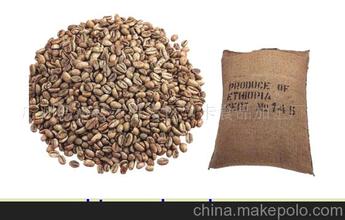
Flavor description of El Salvador Himalayan coffee beans with mild taste introduction to grinding scale varieties
El Salvador is one of the small countries in Central America with a dense population. The flavor of its coffee is characterized by excellent balance. Today, this coffee accounts for 40% of the country's exports. 35% of the extra hard beans of the best coffee are exported to Germany from January to March. In the early 1990s, guerrilla warfare greatly damaged the country's national economy and increased coffee production from the 1970s.

Introduction to the varieties of coffee beans produced by grinding scale in Ethiopia
In Ethiopia, the grading and quality control system of coffee is divided into three levels: producer, regional and national. All coffee is inspected by local inspection agencies before leaving the country of origin, and then re-tested at the coffee inspection and grading centers in Addis and Diredawa to determine its quality grade. Coffee is graded before auction and sale, for all involved in production, acquisition,

El Salvador boutique coffee bean flavor taste introduction to the characteristics of boutique coffee in manor area
Salvadoran coffee ranks side by side with Mexico and Guatemala as the producers of Asa and Merdo, and is fighting for the top one or two places in China and the United States with other countries. The highlands of origin are large coffee beans of all sizes, which are fragrant and mild in taste. Like Guatemala and Costa Rica, coffee in El Salvador is graded according to altitude, and the higher the altitude, the better the coffee